Elite Achievers 2026
A study platform built around the whole revision routine
The web app behind eliteachievers.com.au. Lessons, flashcards, an AI tutor, live chat and voice, study tools and a House Cup, plus the screens tutors and admins run it all from.
eliteachievers.com.au- Client
- Elite Achievers
- Sector
- Education
- Services
- Web applications, AI systems
- Stack
- React, TypeScript, Vite, Supabase, LiveKit, Stripe, Claude, Sentry
- Live
- Chat, voice rooms and the House Cup update in real time
- 1
- Design language shared with the mobile app
- Oct 2026
- Switched to a new backend with students on it
The problem
Elite Achievers helps Australian high school students chase the ATAR they want. The product had grown past what its first build could carry: lessons, practice, AI help, community and the business running it all needed to live in one place, for students who use it daily and notice immediately when something is off.
What we built
A web app that a student opens and studies in, rather than a site that points at other tools.
- Classroom lessons, with a rich editor for the people writing them.
- Recall, spaced repetition flashcards built from the course.
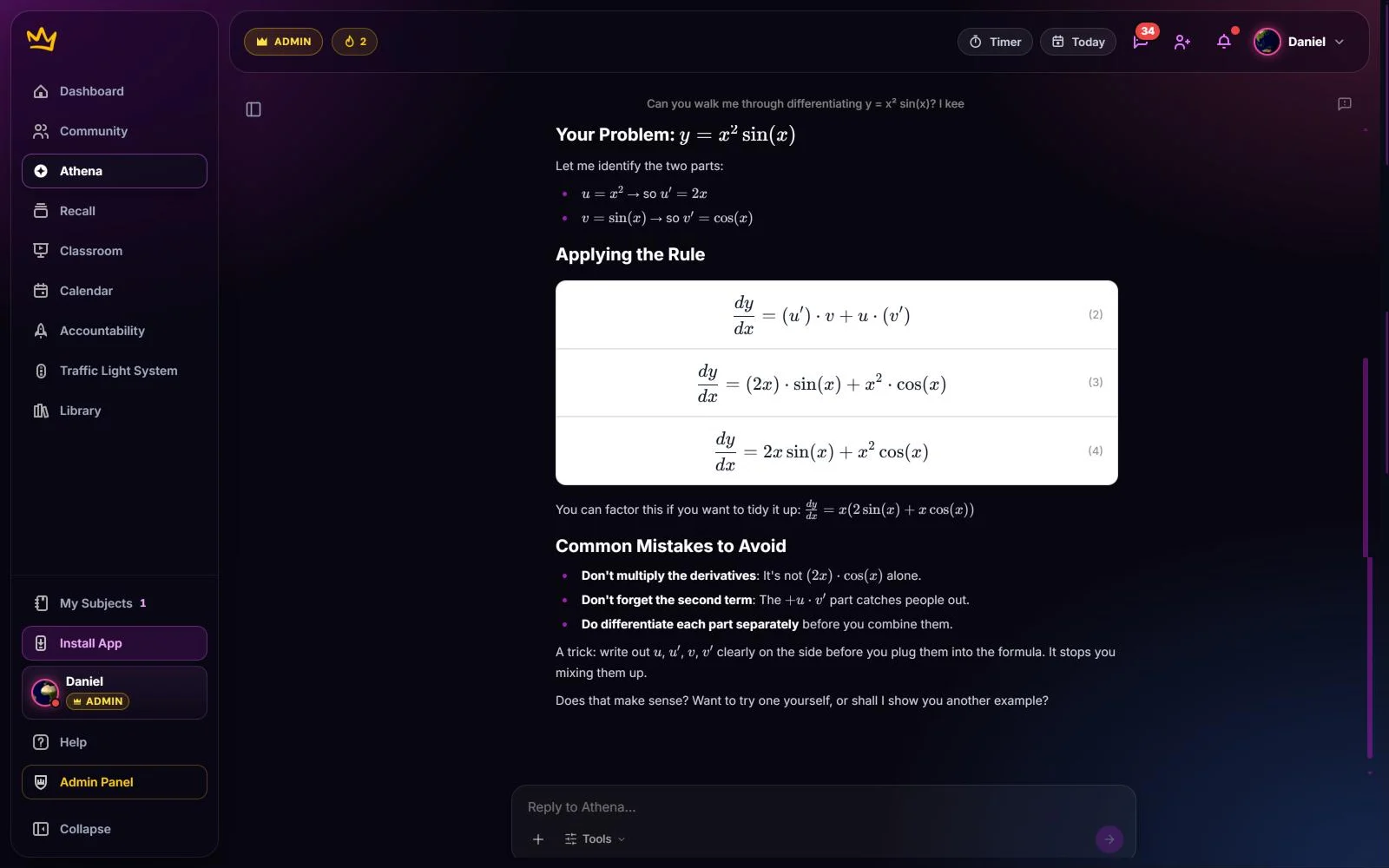
- Athena, an AI tutor built on Claude and grounded in Elite Achievers’ own notes. Maths is typed and rendered as proper notation in both directions, so a student can ask about a formula the way it appears on the page.
- Community chat and live voice rooms, with noise filtering so a study room is usable from a busy kitchen.
- A study timer and accountability tools, because showing up is most of it.
- The House Cup, with XP, streaks, levels and houses competing over the term.
- Tutor and admin screens, and subscriptions through Stripe.
The rule that holds it together
The server owns every rule. Access, XP, streaks, counts and dates are all decided on the backend, and the app shows what it is given. A student cannot award themselves XP from the browser, and the web app and the mobile app can never disagree about a streak, because neither of them is calculating it.
Every read and write goes through one typed API layer. Nothing in the app queries a table directly, and nothing invents data to fill a gap. If a call does not exist yet, it gets requested properly rather than faked in the client.
The database sends meaning rather than styling: a key for a house or a level, never a colour or an emoji. The app maps those keys to its visual system in one place, so a rebrand is a change to one file.
Moving it without stopping it
In October 2026 the app moved onto a new backend, in production, with students on it. That is the work that does not show up in a screenshot and decides whether a platform survives its own growth.
The result
One web app for the whole study routine, sharing its design language and its rules with the native mobile app, written in Australian English because that is who reads it.
Inside the build
Screens.
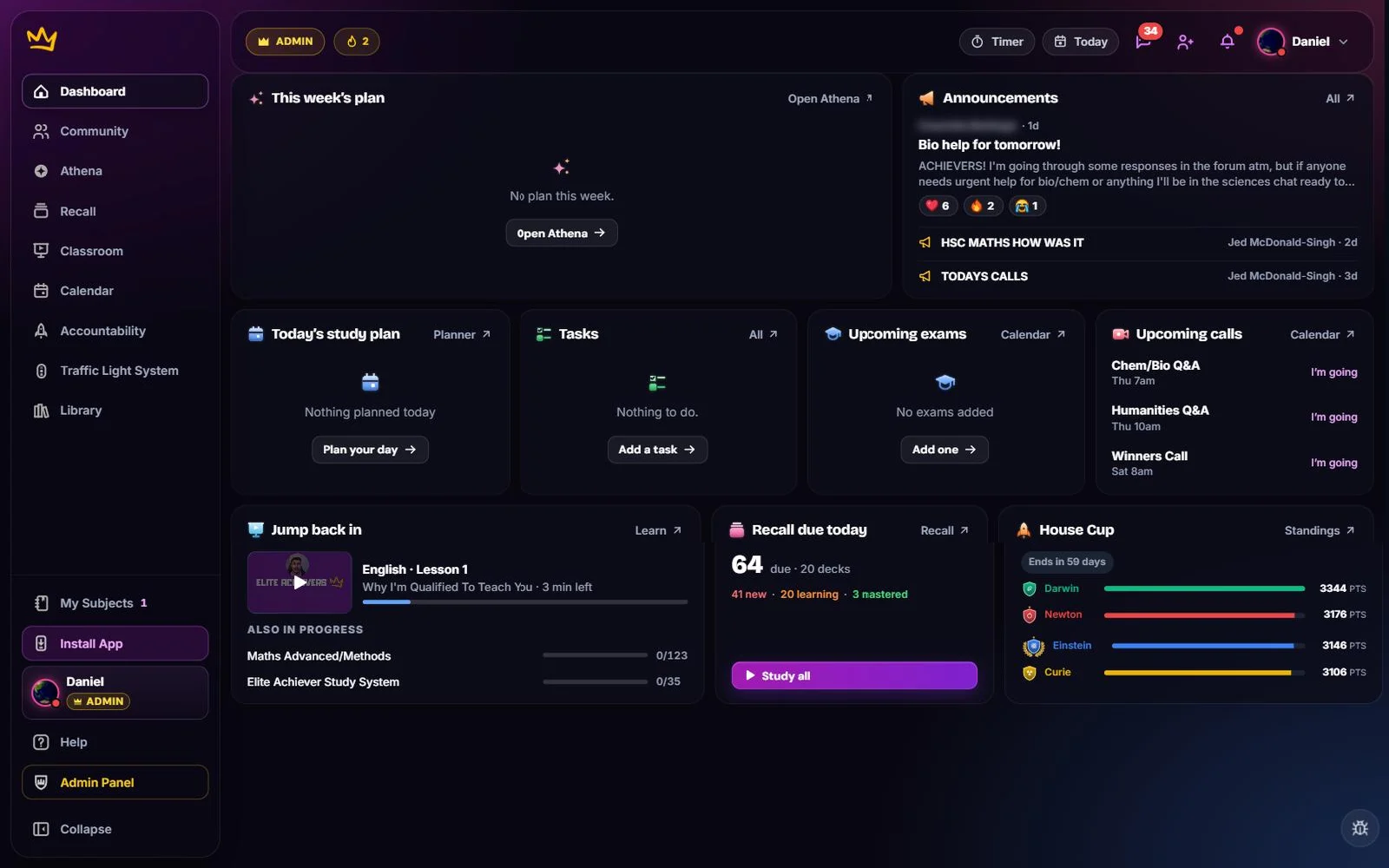
The dashboard. Everything due today, and where your house stands, on one screen.
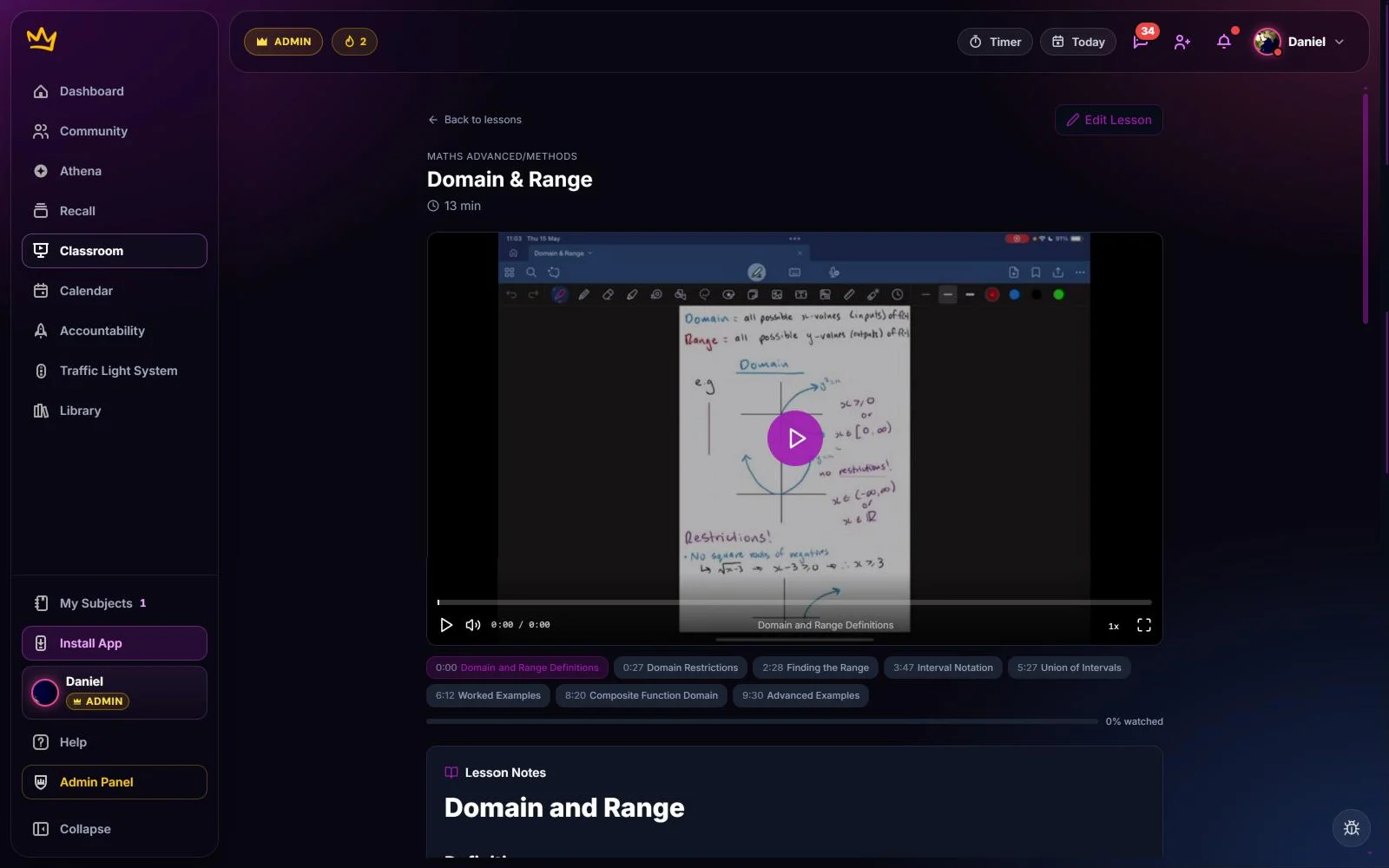
A Maths Advanced lesson, with chapters to jump straight to the worked examples.
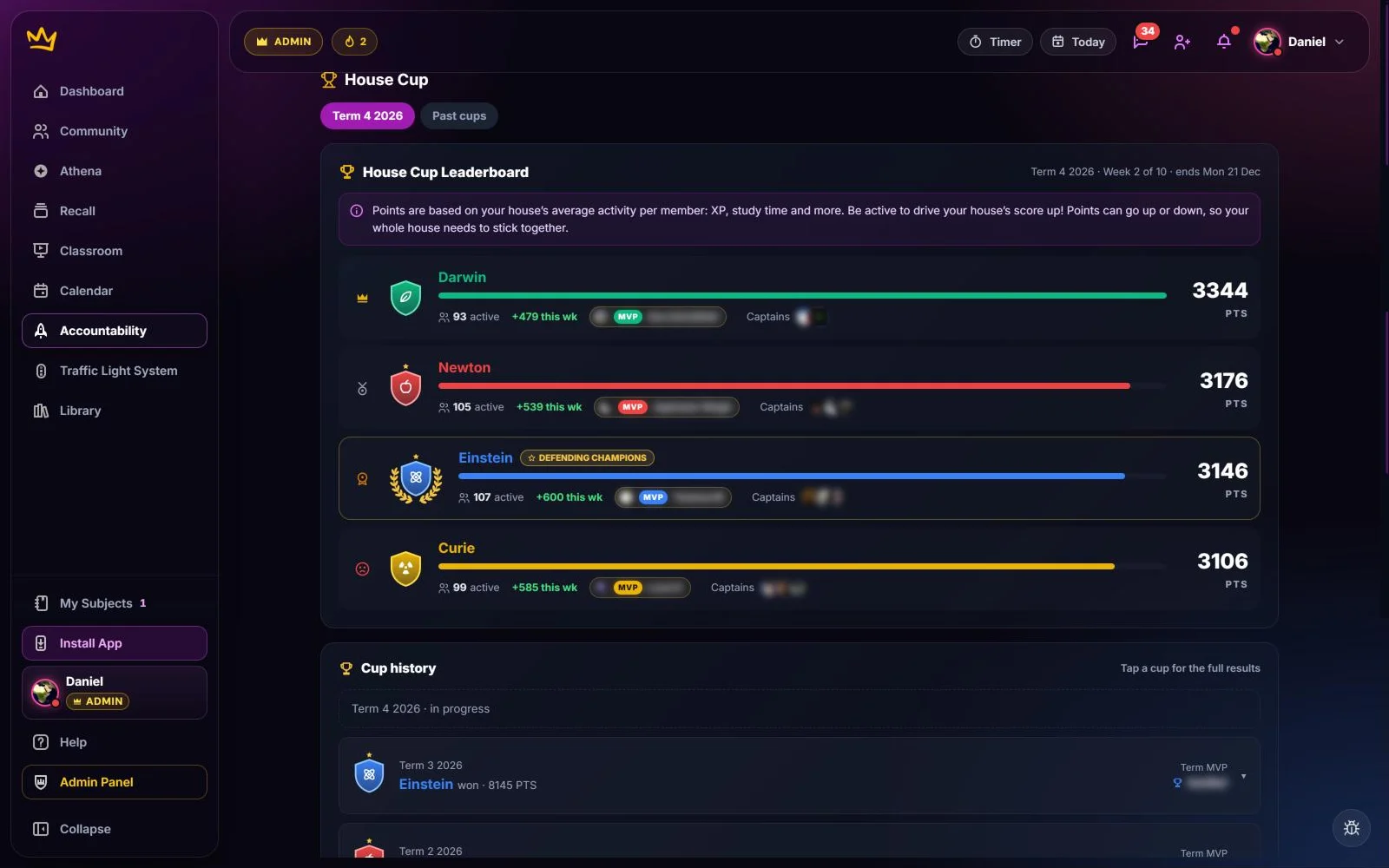
The House Cup. Points come from a house's average activity per member, so every student counts.
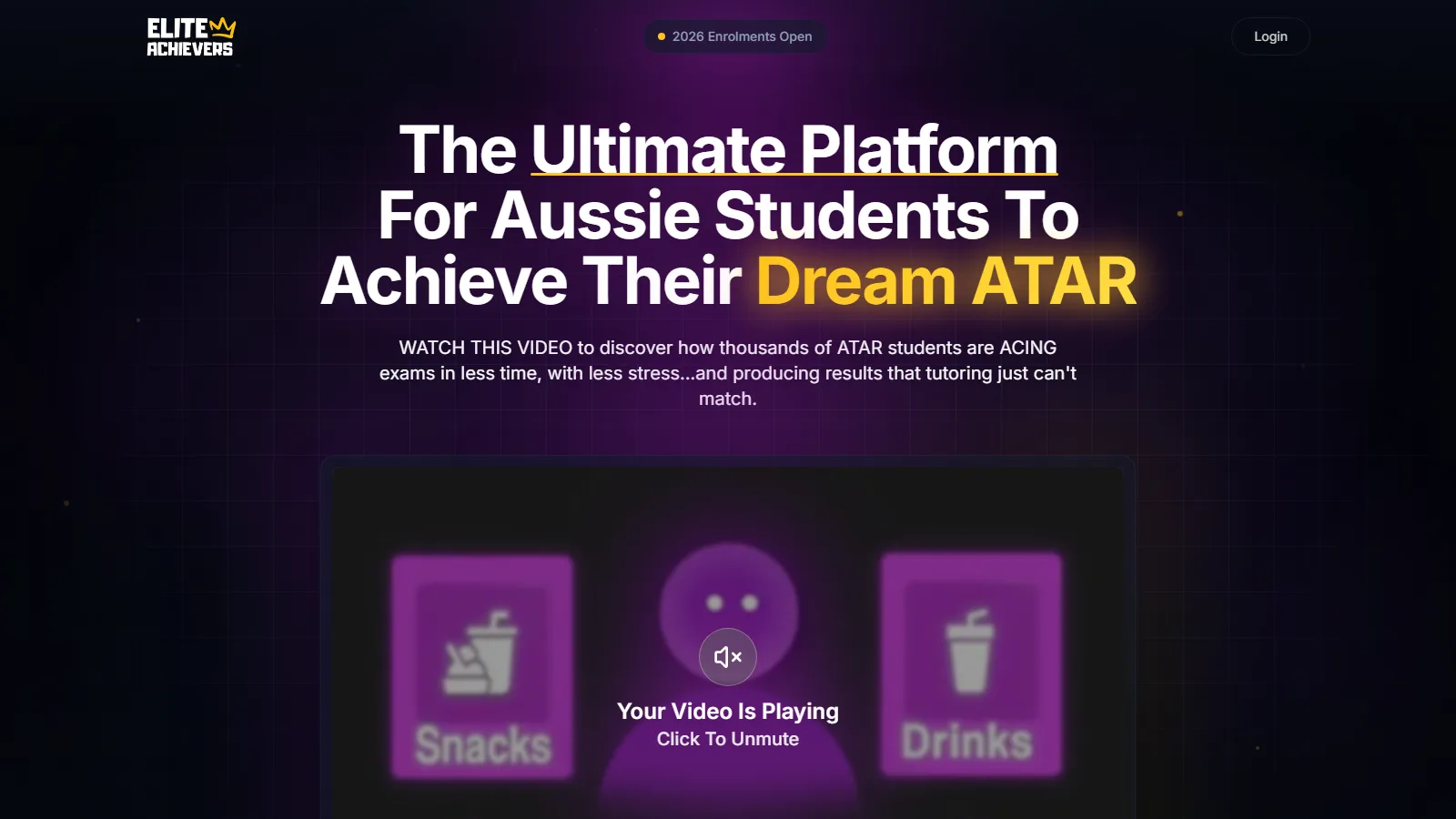
The public site students sign up from.